« So many interesting travel stories are published every day that it was not without some hesitation that I decided, on the advice of friends, perhaps too indulgent, to publish these notes taken during a journey through a region where today all is but ruins, among which roam the remnants of a forgotten race. » Souvenirs de la Haute-Albanie (Memories of Upper Albania), published in 1901 by Alexandre Degrand.
Drawing on a term used by the French engineer Édouard Schneider in a study published a few years earlier, Degrand seeks to enhance the significance of the research to enrich European knowledge about this forgotten people.
Why did Degrand arrive in Shkodër during a century of historical and diplomatic turmoil for Albanians?
Jules Alexandre Théodore Degrand, born into French noble family, joined the French diplomatic service abroad in 1868 as a student-consul, a sort of attaché for consular services at the consulate in Buenos Aires. In 1874, he served as chancellor at the French consulate in Galați, Romania, and later as vice-consul in Rustchuk (Kustendjé) in 1883. This period shaped his career: in 1890, he was awarded the Chevalier de la Légion d’Honneur and began exploring his interests in history, archaeology, photography, and languages. In 1893, Degrand was appointed consul in Scutari (Shkodër), an important Albanian city where his predecessors, including consul Hyacinthe Hecquard, the author of Description de la Haute Albanie ou Guégarie (1863), had stayed. During his mission (1893–1899), Degrand traveled extensively, took photographs, and wrote detailed travel notes. After returning to France, he published Souvenirs de la Haute Albanie (1901), one of the earliest studies of northern Albania, structured as a travel narrative and an ethnographic field study, it gives special importance to his encounters with local inhabitants.
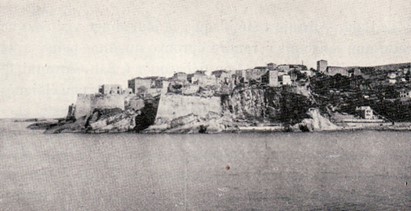
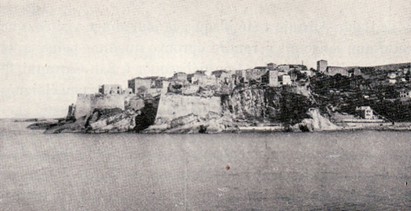
Discovering Degrand’s itinerary to Shkodër, «… I think it’s better to disembark in Ulcinj Dulcigno (Ulcinj), which is worth seeing…, » the modern tourist still has much to learn about the ancient and modern history of Albanian-speaking lands, including Ulcinj. Like all the towns of Albania, Ulcinj had to withstand many sieges. The Turks seized it in 1571, nearly a century after the fall of Scutari. The Venetians attempted to take it in 1696 and 1722 but without success. The town emerged devastated by these conflicts. » (fig. 1 Ulcinj Castle).
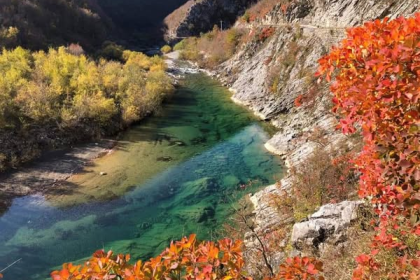
 If Degrand traveled from Ulcinj to Shkodër, spending half the journey « on horseback… then crossing the Boïana (Buna) by ferry », this final boat trip remains recommended today. Depart by small boat from the mouth of the Boïana on the Montenegro side, enter the Adriatic Sea, then turn back on the other side of the Boïana (Buna), admire throughout the journey the banks of the river up to the old bridge, opposite which there is no trace of the old Bazaar described by Degrand as the place where « one must spend one or two days studying the life of the shops and the local industries. […] The jewelers are the most interesting. What patience and skill they must have to produce such fine yet sturdy filigree ornaments with which they decorate the weapons brought
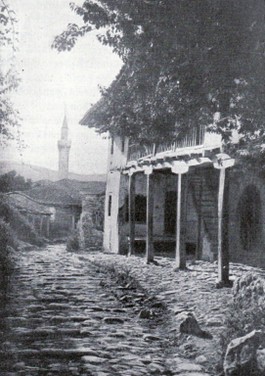
Alley in the Bazaar of Shkodër, Alexandre Degrand, 1890,
http://albanianphotography.net/degrand/index.html
to them; what a variety of designs, graceful in the buttons intended for peasants’ vests, and curious in the heavy, Byzantine-style necklaces that are so richly decorative! ». In any case, although the old Bazaar did not withstand the « storms », the tradition of craftsmanship lives on and continues to bring fame to the city.
At another of Degrand’s stops, « on the street of the Fishmongers », one finds reed-covered huts built on stilts, inhabited by silent and motionless men who wait day and night for the fish to appear. Today, this scene forms part of the cultural identity not only of the fishermen from the villages of Shirokë and Zogaj, but also of many urban residents who share a deep passion for fishing.
If the Koman necropolis was revealed to the archaeological world, it was thanks to Alexandre Degrand, who became the first to set foot there despite its reputation as a dangerous and wild place. Passionate about archaeology, Balkan cultures, of which he had extensive knowledge, and photography, he visited many fortresses, medieval churches and ruins, such as Drivasto (Drisht), Sciassi (Shas), Gaëtan (Gajtan), Masreco (Mazrek), Dagno (Danja), Sarda, Craja (Kraja). He ascended the Delmazian Fortress and the Mountain of Sepulchres near Koman, driven by
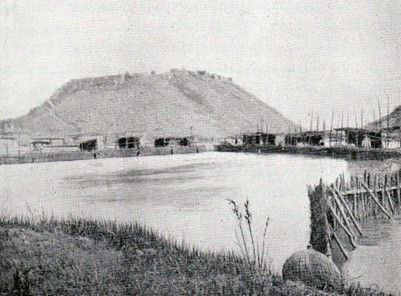
Fishing dam on Lake Shkodër, Alexandre Degrand, 1890,
http://albanianphotography.net/degrand/index.html
the quest to unravel the mysteries of this significant and enigmatic necropolis dating from the sixth through seventh centuries. His excavations, along with the artifacts uncovered in the tombs of Koman and the Dalmatian fortress including bronze neck rings and bracelets, pearl necklaces, bronze and silver earrings and rings, axes, swords, knives, brooches, and iron lighters, prompted him to explore questions regarding the origins of the Albanian people: « Who then was this people, who took such care to ensure the peace of their dead, burying them with all the objects or jewelry they had owned and carrying them up to this height with such difficult access? […] What were their customs, their practices, their religion, their origin? […] “Are the Albanians truly Pelasgians […] who have remained unmixed to this day, having preserved intact their language and most of their customs as some modern writers who have studied them affirm ?» (Degrand : 1901, Souvenirs de la Haute-Albanie). Back in France, he donated these objects to the Museum of National Antiquities in Saint-Germain-en-Laye, near Paris, thereby sparking scholarly interest in conducting further research. What had remained an enigma for Degrand was uncovered 120 years later by a Franco-Albanian archaeological expedition. The excavations revealed the beginnings of the Koman civilization, including, among other findings, more than twelve churches and even cathedrals.
Since 2017, the Franco-Albanian archaeological mission in the Drin Valley, led by Etleva Nallbani, archaeologist and researcher at the CNRS in Paris, has continued the the discovery work initiated in 1960, 1982–1984, and 2008. The excavations aim « to understand the spatial layout of the hilltop settlement of Koman, a monument of the upper town of Sarda and its fortification wall, investigated through two underwater surveys. The mission aims to complete the comprehensive excavation of the main necropolis of Koman, with particular attention to funerary contexts that offer insight into the population over a span of 800 years.” (EFRome website)
Although Degrand struggled to visit these areas, they are now easily accessible and even more picturesque. For this itinerary around Shkodër, focus on Drisht (Drivasto), where nature, history, and culture come together for those who enjoy discovering authentic Albania. Sciassi (Shas), Gaëtani (Gajtan), Mazreco (Mazrek) offer the remains of ancient churches that bear witness to the lives of past communities, Sarda, nestled among green hills and mountainous landscapes, is best explored by a small boat that allows visitors to discover its historical remains (ancient churches and archaeological sites) while enjoying the stunning scenery and listening to local legends shared by dwellers. Upon returning, tasting traditional dishes prepared with fresh and locally sourced ingredients is an experience not to be missed.
The seventy-nine photographs accompanying Degrand’s Souvenirs de la Haute-Albanie are of significant historical value.
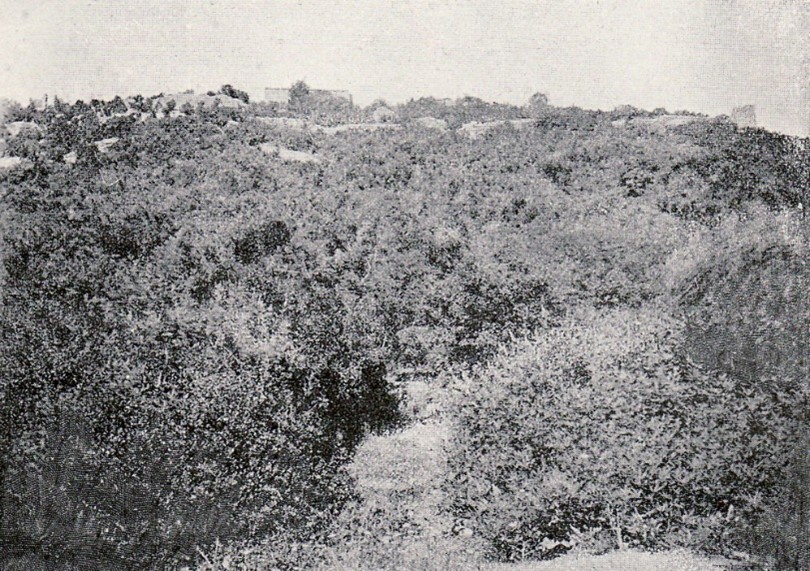
View of ruins at Sarda, Alexandre Degrand, 1890, http://albanianphotography.net/degrand/index.html
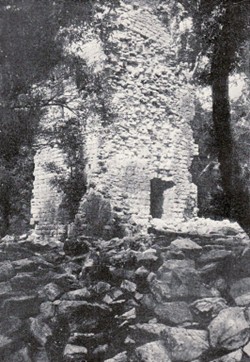
Ruins at Mazreco (Mazrek), Alexandre Degrand, 1890, http://albanianphotography.net/degrand/index.html
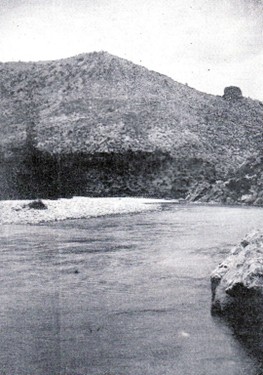
Drivasto Castle (Drisht), Alexandre Degrand, 1890,
http://albanianphotography.net/degrand/index.html